If you’ve ever stood on the production floor of a food manufacturing plant, a metal finishing shop, or even a facility making small ceramic parts, you know one universal truth: the industrial oven isn’t just a big metal box that heats things up. It’s the heart of your process, and getting the temperature right for every product isn’t just a nice-to-have—it’s what separates consistent, saleable goods from waste, rework, and missed deadlines. As an industrial oven supplier who’s spent 12 years walking these floors, troubleshooting issues, and tweaking systems to fit unique production needs, I’ve lost count of how many times I’ve heard plant managers say, “We just crank the temp up a little more because the last batch was off.” That’s a mistake, plain and simple. Adjusting industrial oven temperature for different products isn’t guesswork—it’s a science, rooted in material properties, process goals, and the way industrial ovens actually distribute heat. Let’s break this down like I would with a new plant manager on my team, no jargon, just real-world lessons. Industrial Oven

First, let’s start with the basics: why industrial oven temperature isn’t a one-size-fits-all number. Unlike a home oven, where you set 350°F for a cake and that’s it, industrial ovens work on airflow, heat transfer, and mass load. A home oven’s 350°F is the air temp inside the cavity, but an industrial oven might have that same air temp, yet a thick metal part could be sitting at 320°F in the center because heat is taking longer to conduct through dense material. That’s why the first rule of adjusting temp is to never rely solely on the oven’s thermostat reading. You need to measure the part’s actual temperature, not just the air around it. I learned this early on when a client making aluminum engine parts kept getting burnt outer edges and under-cured cores. Their thermostat was set to 400°F, but the core of a 2-inch thick crankshaft was only at 350°F, while the thin fins at the edge hit 420°F. We installed multiple data loggers in the oven cavity and inside test parts, and that one small step cut their scrap rate by 18% in a month. That’s the foundation: product temperature, not oven air temperature, is your target.
Now, let’s talk about specific product categories, because that’s where most adjustments happen. I’ll stick to the most common ones I work with daily—food products, metal parts, ceramics, and composite materials—and walk through how to adjust temp for each, based on their unique needs.
Starting with food processing, since that’s the largest segment of my customer base. For baked goods like bread, pastries, or cookies, temp adjustments are all about Maillard reaction, moisture retention, and rising time. Let’s take two common products: artisan bread and chocolate chip cookies. Artisan bread needs a high initial temp—425°F to 450°F (oven air temp) for the first 10 minutes—because that quick burst of heat makes the yeast activate fast, stretch the dough, and create that crispy, chewy crust. If you set the oven too low initially, the dough will rise slowly, and you’ll end up with a dense loaf instead of an open crumb. After that first 10 minutes, you drop the temp to 375°F for the remaining 20 to 25 minutes. Why? Because continuing at 450°F would burn the crust before the center is fully set, leading to a hard, inedible outside and doughy inside. For cookies, it’s the opposite: lower initial temp, around 350°F, because they cook faster and have a thinner mass. If you crank the temp up, the edges will spread and burn before the center is soft and chewy. The key adjustment here is mass: denser, thicker products need higher initial temps and a temp drop mid-cycle, while thinner, lighter products need consistent or slightly lower temps to avoid over-browning. For frozen baked goods, like pre-made pizza crusts, you also have to account for the cold mass of the frozen product. If you throw a frozen 12-inch pizza into an oven set to regular pizza temp (425°F), the oven will drop 30 to 40°F when you load it, and it will take longer to cook evenly—so you should bump the initial temp up by 25°F to compensate for that thermal mass drop. This isn’t a guess; we’ve programmed this adjustment into our industrial convection ovens, because fans circulate air and recover temp faster than conventional ovens, but the load still affects it.
Next, metal finishing and heat treatment, which is another huge part of my business. This category includes annealing, tempering, curing powder coatings, and hardening steel. For powder coating, this is where temp adjustments make or break the finish. Powder coating needs a specific “bake time at temp” to melt and flow evenly, and chemically bond to the metal. Let’s take a common part: a steel bicycle frame. Most powder coatings require a cure temp of 375°F, but if the frame has thick, welded sections versus thin tubing, the welded areas will hold more heat. If you set the oven to a uniform 375°F for 15 minutes, the thin tubing will hit 375°F in 10 minutes, while the welds take 15. So you have two options: either extend the bake time for the entire load to 18 minutes, or slightly lower the overall oven temp by 10°F and run the same time, to prevent the thin tubing from over-baking. Over-baking powder coating makes it brittle and prone to chipping, while under-baking makes it peel off. For steel annealing, which is heating steel to make it less brittle and easier to machine, the adjustment is about the material grade. Low-carbon steel (like A36) anneals at 1100°F, but high-carbon steel (like 1095) needs 1200°F, and tool steel needs even higher. The mistake I see here is plant managers using one temp for all steel types, leading to parts that are too hard to machine or too soft for their intended use. We work with metal fabricators to input material specs into our oven’s controls, so the system adjusts temp automatically based on the load’s composition, but it’s still up to us to educate them on why that adjustment is non-negotiable.
Ceramics and composite materials are the trickiest, because they’re sensitive to rapid temp changes. For ceramics, like dinnerware or electrical insulators, you have to adjust temp slowly to prevent thermal shock—cracks from fast heating. Green ceramic (unfired clay) starts at a low temp, around 200°F, to evaporate all the moisture trapped in the clay. If you crank the oven to 1000°F immediately, the moisture turns to steam and expands, cracking the piece. So the first adjustment is a ramp rate: how fast the temp increases. For green ceramic, the ramp rate is 50°F per hour up to 500°F, then 100°F per hour up to the final firing temp of 2200°F for porcelain. For composites, like carbon fiber parts used in aerospace or automotive, it’s even more precise. Carbon fiber composite cures at 250°F, but only if the temp is consistent within 5°F across the entire part. If there’s a 10°F difference in the oven cavity, you get areas that are under-cured (weak) and areas that are over-cured (brittle). For large composite parts, like a truck hood, you need to adjust temp in different zones of the oven—front, middle, back, top, bottom—because air flow is uneven. Our custom industrial ovens have zoning capabilities, which is a game-changer here. I had a client making carbon fiber bike frames who was using a single-zone oven and had a 12% defect rate from uneven curing. We installed a 4-zone oven, adjusted each zone’s temp by 8°F to account for air flow, and their defect rate dropped to less than 2%. That’s the power of targeted temp adjustment, not just a single number for the whole oven.
Now, let’s talk about the common mistakes I see every day, because even if you know the science, it’s easy to cut corners. First, ignoring load size and placement. If you load an industrial oven twice as full as you usually do, the air can’t circulate, so the temp inside the load will be lower than the oven’s thermostat reading. So you can’t use the same temp for a full load as you do for a half load. For example, a full load of cookies needs a 10°F higher oven temp than a half load, because the extra mass absorbs more heat. Second, not calibrating the oven regularly. Over time, thermostats drift—they can be off by 20°F without you noticing. I had a food client who thought their oven was at 350°F for cookies, but it was actually at 335°F, leading to under-baked cookies and customer complaints. We calibrated the thermostat with a NIST-traceable sensor, and their cookie quality improved immediately. Third, confusing convection vs. conventional ovens. Conventional industrial ovens have less airflow, so you need a 25°F higher temp than you would in a convection oven, which circulates air. Convection ovens are standard now, but some older facilities still use conventional, and that’s a big adjustment point people miss.
So, how do you implement these adjustments in your own process? Let’s make a step-by-step guide that’s actionable, not theoretical. First, test your product’s thermal profile: place data loggers inside representative parts, in different spots, for a full load, to see where temp is low and where it’s high. Second, define your process goal: is it maximum speed? Minimum scrap? Consistent quality? That will dictate your temp adjustments. For example, if speed is key, you can adjust ramp rates for materials that can handle it, like low-carbon steel. If quality is key, you’ll prioritize uniform temp over speed. Third, use zoning and data logging to automate adjustments, if you can. Modern industrial ovens don’t have to be set to one temp for the entire cavity—they can adjust temp in zones, track part temp, and adjust for load size. Fourth, keep a log of every bake: what product, temp settings, load size, and quality outcome. That log will tell you when you need to adjust temp for future batches.
As an industrial oven supplier, I don’t just sell you a machine and walk away. I work with you to build a oven that fits your specific products, and train your team to adjust temp correctly. Last quarter, I worked with a small batch bakery that was using a 20-year-old conventional oven with 3 zones, and they were struggling with inconsistent bread. We installed a new convection oven with 6 zones, programmed the thermal profile for their artisan bread, and did three days of on-site training for their bakers on how to adjust temp for different loads and product sizes. Three months later, they called to say their scrap rate was down 22%, and they were able to add a new line of specialty sourdough that they couldn’t make before because their old oven couldn’t hold consistent temp. That’s the difference between a supplier who sells you a box, and a partner who helps you improve your process.
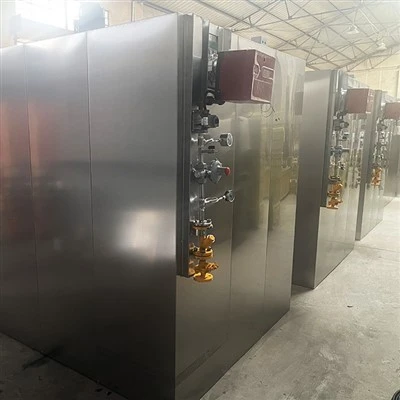
The biggest takeaway I want you to have is this: adjusting industrial oven temperature isn’t about guessing or cranking the dial higher. It’s about understanding your product’s properties, how heat transfers through it, and how your oven distributes air. Every product—whether it’s a loaf of bread, a bike frame, or a ceramic dinner plate—has a unique sweet spot for temp, and getting that right will save you money, reduce waste, and make your customers happy. If you’re struggling with inconsistent product quality, high scrap rates, or just not sure if your oven’s temp is set correctly for your latest product, I’d love to help. We can walk through your process, test your current setup, and find the right oven or adjustments that work for you. Don’t let bad temp settings hold your production back.
Industrial Furnace References
- Brown, A. K. Industrial Oven Design and Heat Transfer for Manufacturing. Industrial Press Inc., 2019.
- Food and Drug Administration (FDA). Baking Process Control for Commercial Food Facilities. 2021.
- American Welding Society (AWS). Heat Treatment of Steel for Fabrication and Manufacturing. AWS D1.1/D1.1M:2020.
- International Organization for Standardization (ISO). Ceramic Firing Processes: Thermal Profile Requirements. ISO 13006:2018.
- Society of Manufacturing Engineers (SME). Industrial Convection Ovens: Operational Best Practices. SME, 2022.
Nanjing Ranran Tiancheng Drying Equipment Co., Ltd.
As one of the most professional industrial oven manufacturers and suppliers in China, our products have good reputation in the market. Please feel free to buy advanced industrial oven for sale here from our factory. All customized products are with high quality and competitive price.
Address: No. 5 Xinhua Road, Shangba Village, Longtan Street, Qixia District, Nanjing City
E-mail: rrtc@rrtcoven.com
WebSite: https://www.rrtcoven.com/
