As a line steel connector supplier, I’ve spent over a decade working side-by-side with structural engineers, construction foremen, and project managers. Most days, our work feels like solving a quiet puzzle—one where a slightly misaligned connector or a dimensional gap can throw a whole steel frame assembly off schedule. But let’s be honest, no matter how thorough our quality checks are, and no matter how many times we test our products against industry standards, we all hit a snag: a line steel connector that just doesn’t meet the requirements. It’s not a failure of the product, and it’s not a failure of the project team; it’s a moment that calls for clear, actionable steps, and that’s what I’m here to walk you through today. Line Steel Connector
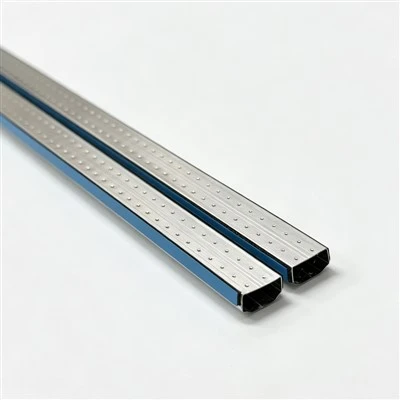
First, let’s get one thing straight: “doesn’t meet requirements” can mean so many different things. It’s not a one-size-fits-all label. When a connector comes back flagged, the very first question we ask—both as suppliers and as project stakeholders—is “what exactly is off?” Is it a dimensional mismatch? Maybe the hole spacing is 1/16 of an inch wider than specified, or the flange width is slightly too narrow. Is it a material issue? Did the galvanized coating fail the salt spray test, or is the steel grade lower than the ASTM A36 standard we agreed on? Is it a finish problem? Minor cosmetic scratches that don’t affect structural integrity, or deep cracks that show up on non-destructive testing (NDT)? Naming the exact issue is non-negotiable, because the steps you take next depend on it.
Early in my career, I made a mistake here. A contractor reached out to me, frustrated because a batch of our line steel connectors wouldn’t fit their pre-drilled beam ends. They just said “they don’t work” and demanded a full refund. I jumped straight to offering replacements without asking for details, and it turned out the contractor had modified their beam holes after we produced the connectors—we weren’t at fault, and a full refund would have cost both sides thousands of dollars. That experience taught me: never skip the root cause check.
So step one: document and verify the non-conformity, together. As your connector supplier, I can tell you that the best first move is to pull together three sets of information. First, your on-site or quality team’s non-conformity report: photos, measurements, test results, and a clear description of how the connector falls short. Second, our own production and quality records for the batch in question: mill test reports for the steel, in-process dimensional checks, third-party inspection results if we used one. Third, if possible, a quick cross-check with the design specifications. For example, if the connector is supposed to fit a W10x22 beam, confirm that the beam itself is actually the correct grade and dimension, not a mislabeled or mis-cut beam that’s throwing the fit off. This step isn’t about pointing fingers—it’s about getting to the real issue fast, and avoiding unnecessary delays that derail project timelines.
Once you know exactly what’s wrong, the next step is to assess the severity of the non-conformity. Not all issues are created equal. Let’s split this into three categories to make it simple: cosmetic non-conformities, functional non-conformities, and structural non-conformities. Cosmetic issues are the ones that don’t affect how the connector works. Maybe a small scuff on the galvanized coating that doesn’t expose raw steel, or a minor burr on the edge that can be sanded off in 30 minutes. I’ve seen projects run into these all the time—especially on large orders where a few connectors get banged up in shipping. Functional non-conformities are issues that affect fit or basic use: the hole spacing is off enough that the bolt won’t line up, the shear strength is slightly below the specified minimum, or the connector won’t sit flush against the steel beam. These are fixable, but they need careful handling. Structural non-conformities are the red line: cracks in the steel, insufficient yield strength, coating that would fail salt spray testing before the project’s warranty period, or dimensional gaps that create a load point weak spot. These can’t be ignored.
Last year, a structural engineering firm reached out to us with a batch of our line steel connectors that showed hairline cracks during NDT. The cracks were less than 1mm wide, which was below the mandatory structural tolerance for a project in a coastal climate. We immediately pulled the batch’s production records and found that one of our steel coils had a tiny internal flaw that slipped through our first ultrasonic test. That was a clear structural non-conformity, and our response was immediate: we arranged for NDT on every single connector in the batch, identified the bad ones, and delivered the correct, tested replacement parts to the project site within 72 hours—no questions asked, no extra charge. But that’s because we knew the severity, and we acted fast.
Now, let’s talk about what to do once you’ve categorized the severity, and this is where working with a reliable supplier makes all the difference. As a supplier, we don’t just sell connectors—we stand behind them, but we also have the expertise to solve problems. Let’s break down the solutions for each category, starting with the easiest: cosmetic non-conformities. For these, the solution is often a simple on-site fix. If a galvanized coating has a minor scratch, we provide a matching zinc touch-up kit for free, and guide your team on how to apply it correctly to maintain corrosion resistance. If there are minor burrs, a portable deburring tool takes minutes to fix, with zero impact on performance. We’ve even had projects use fine-grit sandpaper to smooth small, cosmetic weld seams without any issues. The key here is to confirm with your project engineer that the cosmetic flaw doesn’t affect load capacity, corrosion, or fit—if that check passes, you’re good to go without returning parts.
Next, functional non-conformities. These are the ones that need a little more coordination, but they’re rarely a project killer. Let’s take the example of a connector with hole spacing that’s 1/32 of an inch off. That’s small, but enough that a standard bolt won’t line up. Our first call here isn’t to demand a new connector (though we will offer that if needed); we ask if your team can use an oversized bolt, or if a quick field modification with a portable hole punch can fix it. Wait, you might be thinking—field modifications sound risky. But our engineering team has calculated that a 1/32 inch oversized hole, paired with a properly torqued bolt, meets most building code requirements for line steel connections. That’s why documenting the issue and consulting both our experts and your engineer is critical. Alternatively, if field modifications aren’t an option, we can expedite a new production run for the correct connectors—we have lead times as short as 48 hours for emergency orders, because we know construction projects don’t wait. For dimensional gaps that affect fit, we can also provide custom shims (manufactured from the same grade of steel as the connector) that are precision-cut to fill the gap, eliminating the need to replace the entire connector. We did this for a bridge repair project in the Midwest a few years ago—their connectors were 1/8 inch too narrow, and custom shims let them keep the existing beam connections without halting the project.
Now, the hardest category: structural non-conformities. These are non-negotiable, and they require immediate action. As a supplier, our first priority here is to ensure the project’s safety, full stop. If a connector fails structural testing—whether that’s a shear test, tensile test, or NDT for cracks—we do three things: first, we issue a full quality hold on the entire suspect batch to prevent it from being installed. Second, we work with your team to run a full traceback on all connectors that were shipped with that batch, so you don’t have to inspect every single part on your site unnecessarily. Third, we provide a zero-cost replacement batch, usually produced with our highest quality assurance protocols and third-party inspection, delivered as fast as our logistics team can arrange it. We also update our internal quality checks to make sure the same flaw never happens again—because our reputation depends on our connectors keeping projects safe, plain and simple. I’ve seen too many suppliers hide structural flaws to avoid costs, and that’s not just bad for business—it’s dangerous for construction teams and the public. We take structural non-conformities very seriously, because at the end of the day, line steel connectors hold up buildings, bridges, and stadiums—safety is non-negotiable.
Wait a second—what if the non-conformity isn’t the supplier’s fault? I mentioned this earlier, and it’s a common scenario. Sometimes, a project team might modify the design, mismeasure the beam, or install the connector incorrectly, leading to a part that “doesn’t meet requirements.” This is where clear communication between all stakeholders is key. As your supplier, we’re here to offer guidance, not just products. If your team made a field modification that led to a fit issue, we can help you assess whether the connector is still safe, or recommend a custom solution to fix the problem without extra cost. We once had a contractor who tried to cut a connector’s flange to fit a tight space, and ended up weakening its load capacity. Instead of charging them for a new connector, we worked with their engineer to design a reinforced support bracket that worked with their modified parts, saving them thousands in emergency orders. We’re not just a vendor—we’re a partner, and that means owning solutions no matter where the issue comes from.
Another thing to consider: documentation. For every non-conformity, keep a paper trail. Photos, measurements, test reports, communication with your supplier—all of this will be invaluable if you need to resolve a warranty claim, meet building code requirements, or defend against a future dispute. I’ve seen projects get stuck for weeks because they couldn’t prove a connector was defective, and a clear paper trail can cut resolution time from weeks to days.
Now, let’s wrap this up with a few key takeaways. First, don’t panic when a connector doesn’t meet requirements—this is a common part of large-scale construction projects, and how you handle it determines the outcome. Second, start with clarity: define exactly what’s wrong, from dimensional gaps to structural flaws. Third, categorize the severity: cosmetic, functional, or structural, and tailor your solution to that. Fourth, work closely with your line steel connector supplier—they have the expertise, resources, and stake in the project’s success to help you solve problems fast. Fifth, always prioritize safety for structural issues, and communicate openly to avoid misalignment between teams.

At the end of the day, our goal as a line steel connector supplier is simple: to provide parts that work, and to be there when they don’t. We know construction timelines are tight, budgets are strained, and every delay has a ripple effect. That’s why we’ve built our business on flexible, reliable support for every stage of a project—from order placement to installation support to resolving any issues that pop up. If you’re dealing with a line steel connector that doesn’t meet requirements, or just want to make sure your next order is set up for success, we’re here to listen. Reach out to our team of engineering and customer support specialists to walk through your specific situation, no obligation.
Other Insulating Glass Accessories References
- American Institute of Steel Construction. (2022). Specification for Structural Steel Buildings (ANSI/AISC 360-22). AISC.
- ASTM International. (2021). Standard Specification for Zinc-Coated (Galvanized) Steel Coatings on Steel (ASTM A126/A126M-21). ASTM.
- Construction Industry Institute. (2020). Managing Non-Conforming Materials on Construction Sites. CII Publication 255.
- Occupational Safety and Health Administration. (2019). Steel Erection Safety and Health Standards (29 CFR 1926 Subpart R). OSHA.
Renqiu City Xinjian Metal Products Co., Ltd.
Renqiu City Xinjian Metal Products Co., Ltd. is one of the most professional line steel connector manufacturers and suppliers in China. With abundant experience, we warmly welcome you to wholesale customized line steel connector from our factory. If you have any enquiry about free sample, please feel free to email us.
Address: Caicun Dajie Village, Changfeng Town, Renqiu City, Hebei Province China
E-mail: melody@xinjianmetal.com
WebSite: https://www.xjglassspacer.com/
