Hey there, fellow engineers, plant managers, and anyone who’s ever wondered why that critical insulating paper in their electrical equipment acts up when the air feels like a wet sponge. I’m Jake, part of the team at [your company name], the folks who’ve been supplying insulating paper to industries for over a decade. Today, I want to pull back the curtain on something that trips a lot of people up—humidity. It’s not just “wet air”—it’s a tiny factor that can mess with insulating paper way more than you’d think, and understanding that keeps your gear running without a hitch. Let’s dive in, no stuffy jargon, just real talk from someone who’s seen this play out in the field. Insulating Paper
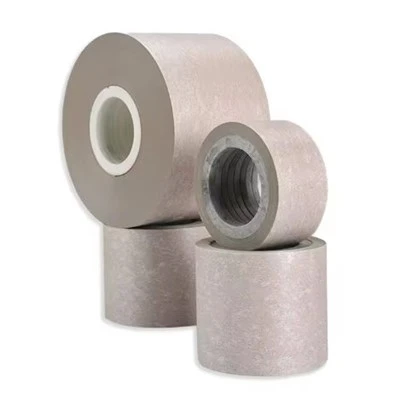
First off, let’s keep this basic: insulating paper’s whole job is to stop electricity where it shouldn’t go. Whether it’s wrapping a transformer winding, isolating circuit board traces, or keeping a motor’s coils separated, this paper is the unsung hero of electrical safety. But here’s the thing: it’s not a plastic box—paper is porous. It’s made of cellulose fibers, right? Those fibers are like tiny sponges, and they love to absorb water vapor from the air around them. That’s where humidity comes in, and it’s way more impactful than just “adding a little moisture.”
Let’s break down the science without making your eyes glaze. Cellulose has a bunch of hydroxyl groups (-OH) on its fibers. Those groups are hungry for water molecules—when humidity goes up, the water vapor in the air binds to those -OH groups. The more humid it is, the more water sticks. Now, how does that change the paper’s performance? Let’s start with the big one: dielectric strength. That’s the measure of how well the paper can resist an electrical current jumping through it. Normally, dry insulating paper has a super high dielectric strength—like, thousands of volts per millimeter. Add water, and suddenly those water molecules act like little conductors. They let electricity pass through way easier. I’ve seen this firsthand: a client told me their transformer tripped unexpectedly during a rainy season, and when we tested the insulating paper inside, its dielectric strength had dropped by 30% because of high ambient humidity seeping in. That’s a 30% drop—enough to cause a short circuit, damage equipment, and cost them thousands in downtime. It’s not just a theory; it’s a real problem that happens all the time when humidity isn’t accounted for.
Next up, mechanical strength. Insulating paper isn’t just a static barrier—it needs to hold its shape, right? You wrap it around tight coils, and it has to stay there without tearing or stretching. When cellulose fibers absorb water, they swell. Swelling is good in some cases, but here it messes things up: the fibers become weaker, less rigid. Dry paper is tough, can handle being rolled, folded, or pulled tight. Wet paper? It’s flimsy, almost mushy. I had another client who was using a standard kraft insulating paper in a humid factory space. They noticed their winding insulation was fraying a lot faster than expected—turns out, the high humidity in the plant was making the paper’s tensile strength drop by 25%. Frayed insulation leads to exposed wires, which is a fire hazard. That’s another thing to worry about: if the paper gets too wet, it might not just lose insulating power—it could physically fail, leaving your gear unprotected.
Wait, there’s more. Humidity doesn’t just affect the paper itself—it interacts with the other materials around it, like the oil in transformers or the varnish on motor coils. For transformers, the insulating paper is impregnated with oil to boost its insulating properties. If the paper has absorbed moisture from the air, that moisture will leach into the oil too. Water in transformer oil is a big no-no; it lowers the oil’s dielectric strength and can cause corrosion on metal parts inside. I’ve worked with transformer technicians who do “dry outs” every time humidity spikes, because even a little moisture in the paper can spread through the whole system. For motors, the insulating paper is bonded with varnish—humidity makes the varnish peel away from the paper, creating tiny gaps where electricity can leak. It’s a domino effect: humidity hits the paper, the paper fails, and suddenly your entire electrical system is at risk.
Now, let’s talk about what humidity levels matter here. It’s not just “high humidity” in general—there’s a sweet spot for insulating paper, usually between 30% and 50% relative humidity (RH) for storage and application. Below 30%? The paper gets too dry, becomes brittle—you can crack it when you’re wrapping it, which leaves gaps for electricity to sneak through. Above 50%? That’s when the water absorption starts to skyrocket, and all the issues I mentioned kick in. I’ve had clients store insulating paper in a warehouse with 60% RH during summer, and when they opened the boxes a week later, the paper was noticeably damp. They lost a whole batch because they didn’t know humidity in storage was that critical. Storing the paper in air-tight packaging with desiccants? That’s a small step that prevents so many headaches.
But here’s the good part: this isn’t a doom and gloom situation. As an insulating paper supplier, we’ve spent years developing products that handle humidity way better than standard paper. For example, our moisture-resistant insulating paper is treated with a thin polymer coating that slows down water absorption—so even if humidity is in the 55% range, it doesn’t soak up as much water, keeping its dielectric strength and mechanical integrity intact. We also do a bunch of testing in our lab: we expose paper to controlled humidity levels (from 10% to 90% RH) and test its performance over time. That’s how we know exactly what works when humidity is high.
Wait, let’s clear up a common myth: some people think “oh, if it’s just a little moisture, it’s no big deal.” But even a tiny amount of moisture can add up over time. Humidity is cyclic—high during the day when it’s hot, low at night, but the paper absorbs and releases moisture with those cycles. That swelling and shrinking of the cellulose fibers over time weakens the structure of the paper, even if the overall moisture level isn’t super high. It’s like bending a paper clip back and forth—eventually it breaks, right? That’s what happens with insulating paper exposed to humidity cycles over months or years. So it’s not just about peak humidity—it’s about consistent exposure that wears the paper down.
I want to make this personal, because I know these problems are real for folks running electrical equipment. A few months back, a client reached out to us panicking because their new industrial motor was failing every two months. They were using a standard insulating paper and keeping it in a semi-outdoor storage area. We asked about their humidity levels—they said the storage area hit 65% RH in summer. We recommended switching to our moisture-resistant paper and storing it in air-tight containers with desiccants. Six months later, they reached out to say the motor hasn’t failed once. That’s the kind of result we’re here for—solving problems, not just selling paper.
So what does this mean for you? If you’re dealing with insulating paper, keep an eye on humidity—both in storage and in the environment where your equipment runs. Don’t just assume “it’s dry enough” because it feels dry to you. Use a cheap hygrometer to check RH levels. If you’re in a humid climate or have equipment in a space with high moisture, invest in moisture-resistant insulating paper and proper storage (air-tight boxes, desiccants). And if you’re not sure what kind of paper is right for your specific humidity conditions, reach out to someone who knows—like us. We don’t just send you a roll of paper; we help you figure out what works for your setup.

Let me wrap this up real quick to make sure I didn’t miss anything. Humidity affects insulating paper because it’s made of porous cellulose fibers that absorb water, which drops dielectric strength, weakens mechanical integrity, and causes issues with surrounding materials like oil or varnish. The sweet spot for RH is 30-50%—too low and paper gets brittle, too high and it fails. Cyclic humidity exposure over time is just as bad as peak high humidity. And luckily, there are solutions (like moisture-resistant paper) that mitigate these issues.
Carbon Fiber Flexibility If you’re dealing with inconsistent insulation performance, equipment failures, or just want to make sure you’re using the right insulating paper for your humidity conditions, don’t hesitate to get in touch with our team. We can walk through your setup, answer any questions about how humidity interacts with different papers, and help you find the best solution to keep your gear running smoothly. No sales pitch, just straight talk—we’ve been doing this long enough to know that the best partnerships come from solving problems, not pushing products.
References
- ASTM D149, Standard Test Method for Dielectric Breakdown Voltage and Dielectric Strength of Solid Electrical Insulating Materials at Commercial Power Frequencies
- Nelson, K. D., “Moisture Effects on Cellulose Insulation in Power Transformers,” IEEE Transactions on Electrical Insulation, Vol. 26, No. 3, 1991, pp. 401–412
- Berkal, J., et al., “Humidity-Induced Degradation of Cellulose-Based Insulating Papers,” Journal of Applied Polymer Science, Vol. 135, No. 12, 2018, p. 45972
- IEC 60641, Pressboard and Presspaper for Electrical Purposes — Methods of Tests and Requirements
Wenzhou Gisen Insulation Material Co., Ltd.
As one of the most professional insulating paper manufacturers and suppliers in China, we’re featured by quality products and good service. Please rest assured to wholesale customized insulating paper from our factory. Contact us for quotation and free sample.
Address: Diyan Industrial Zone, Wengyang Subdistrict, Yueqing City, Zhejiang Province
E-mail: gisen888@126.com
WebSite: https://www.giseninsulation.com/
