If you’re reading this, chances are you own or operate a manufacturing facility that relies on injection molding robot arms to keep production lines running. Maybe you’ve just hit a snag mid-shift—your pick-and-place arm is dropping parts, the control panel is flashing an error code you can’t decipher, or it’s suddenly not syncing with your injection molding machine. I know that feeling, because I spent 12 years on the floor troubleshooting these exact robots before starting our supply business for injection molding robot arms. Early on, I watched plant managers waste 4+ hours waiting for a generic tech who didn’t know the ins and outs of our specific hardware, or paying premium same-day fees for a specialist who still missed small, critical details. Over the years, I’ve refined the process of getting the right technical support fast, and today I’m breaking down exactly how to get the support you need—straight from a supplier who designs, builds, and stands behind these arms every day. Injection Molding Robot Arm
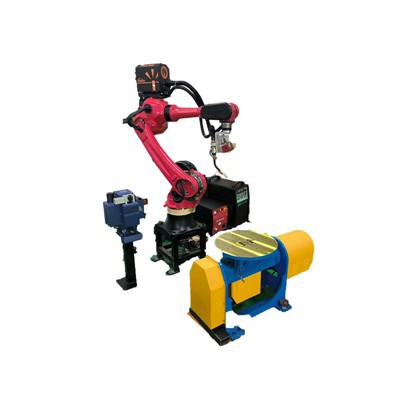
First, let’s cut through the noise: the best technical support doesn’t start with a call to a technician. It starts with preparation. When an issue hits, the first thing most people do is grab the phone, but pausing for 5 minutes to gather specific details will cut your resolution time in half. Let’s be clear: not all support is created equal. If you call a third-party repair shop, they’ll ask for the model and serial number. If you call a generic industrial robot support line, they’ll ask for that too. But if you call our team—who built your arm—we’ll need a few extra, specific pieces of information that most plant staff never think to write down, and these details prevent us from wasting your time. For example, what’s the exact model of your injection molding machine paired with the robot? A 2022 Fanuc Roboshot requires a different calibration than a 2018 Engel Victory, and mismatched motor specs are the #1 cause of sync errors. Next, when did the issue start? Was it after a routine maintenance check you did last week, or did it happen after a power surge during a storm? That timing is huge—power surges are rare, but they blow internal circuit boards, and if you mention a storm, we can pre-test that part before we even talk through the error. Finally, write down the exact error code, even if it’s a long string of numbers and letters. I once had a client tell me “the arm won’t move” for 20 minutes, and when I asked for the error, it was E017—meaning a gripper pressure sensor was out of alignment, a fix that took 2 minutes over the phone instead of a 2-hour on-site visit. Don’t skip this step; I promise it’s worth the 5 minutes of note-taking.
Once you’re ready to reach out, the next move is to pick the right channel for your issue. This is where most plant managers mess up—they call the 24/7 line for a minor calibration problem, waiting 2 hours for a technician when a quick email would have fixed it in 10 minutes. Let’s categorize common issues and match them to the best support channel, based on how our team operates and what works for our clients:
Minor, time-sensitive issues—think a gripper that’s slightly off-center, a sync error that pops up during a test run, or a loose cable you can spot on the control panel—are best handled via our dedicated technical support ticket portal. We created this portal specifically for small, non-critical problems because it lets our technicians respond at their own pace, and you can attach photos or a short video of the issue, which is way more helpful than a verbal description. Last month, a client from Ohio sent a 10-second video of their pick-and-place arm dropping thin plastic parts, and our team spotted immediately that the gripper’s rubber pads were worn down from 8 months of use, no tools required. We sent them a replacement set via standard shipping that day, and they were back running in an hour. For these small issues, the portal is free, no extra fees, and you get a ticket number to follow up on, so you don’t have to call and wait on hold. You only need to contact our 24/7 phone line if you have a production-critical issue that’s stopping your entire line—like a robot arm that’s totally unresponsive, or a malfunction that’s damaging your injection molding molds. For these, we offer two tiers: same-day on-site support for clients within 200 miles of our service centers, and remote support for all other locations. Remote support uses a secure, encrypted tool that lets our technicians access your robot’s control panel (with your permission, of course) to run diagnostics, adjust parameters, or update firmware. We’ve fixed 70% of critical issues remotely in the last year, saving clients an average of $1,500 in travel and labor fees for on-site visits. That’s a big win for anyone running a tight production schedule.
Another key tip: know the difference between standard manufacturer support and third-party support, and when to use which. I’ve heard horror stories of plant managers choosing a third-party repair to save money, only for the tech to damage a custom encoder or reset calibration settings that our team spent weeks fine-tuning. Here’s the rule I live by: if your robot is still under the original warranty (most injection molding robot arms come with a 12-month parts-and-labor warranty from the supplier), always go straight to the manufacturer’s support first. Our warranty doesn’t cover repairs from unapproved technicians, so if a third-party breaks something, you’ll be on the hook for that cost, plus the original issue. For out-of-warranty robots, third-party support can sometimes be cheaper, but only if the tech specializes in injection molding robot arms—not general industrial robots. General robot techs often don’t understand the tight tolerances required for injection molding, where a 1mm off-position can damage a $5,000 mold. That said, if you work with a supplier like ours, out-of-warranty support is usually reasonably priced too, plus you get access to genuine OEM parts, not knockoffs that wear out in half the time. Last quarter, we had a client with a 3-year-old robot that was out of warranty, and a third-party quoted them $2,800 to replace a motor module. Our team quoted them $1,900 for the same module, installed it in an hour, and included a 6-month labor warranty—so choosing the original supplier saved them nearly $1,000 and gave them longer coverage.
Preventive support is the unsung hero here, and something we push all our clients to use, even if it’s not an emergency. The best way to avoid needing urgent technical support is to do two things: schedule annual maintenance checks directly with your robot supplier, and keep a spare parts kit on hand for common issues. Our team offers annual preventive maintenance plans that cost a fraction of an unplanned downtime event. A typical maintenance check includes tightening all cables, calibrating the arm’s position, testing gripper pressure, and updating control panel firmware. We did a check for a client in Indiana last year, and we noticed a worn gear that was starting to grind—replacing it during a scheduled maintenance cost them $300, whereas if it had failed unexpectedly, it would have cost them $20,000 in lost production and rush repair fees. For spare parts, our recommended kit includes extra gripper pads, a set of common fuses, and a spare USB drive with the latest firmware for your specific model. We keep these kits priced at $150 for small arms and $250 for larger, high-payload arms, and we’ve sent dozens of kits to clients who avoided downtime by swapping a pad or fuse in 2 minutes, instead of waiting 3 hours for a tech to arrive.
Now, a question I get all the time: what if the support I need isn’t covered by my warranty or my plan? For example, if you modified your robot arm to handle a different part size, or you’re running it with an older injection molding machine that’s not in our original testing specs. In these cases, our team still provides support, but it’s a paid service, and we make sure you know the cost upfront before we start any work. We hate surprise fees as much as anyone, so we always send a detailed quote that breaks down parts, labor, and travel (if applicable) before we do anything. For custom modifications, our technical support team can work with you to adjust programming, add custom grippers, or sync your arm to non-standard injection molding machines, which is a big benefit of going with the original supplier instead of a generic robot company.
At the end of the day, the goal of getting technical support for your injection molding robot arm is simple: minimize downtime and get your production line back up and running as fast as possible. The biggest mistakes I see plant operators make are skipping pre-prep when an issue hits, choosing the wrong support channel, and waiting until something breaks before reaching out for regular maintenance. As a supplier who’s been in the trenches with these robots for years, I can tell you that taking 5 minutes to gather details before calling, picking the right support channel for your issue, leaning on your supplier for both emergency and preventive care, and having a small spare parts kit on hand will save you thousands in lost production, repair fees, and stress.
If you’re dealing with an issue right now, or you want to set up a preventive maintenance plan for your injection molding robot arms to avoid future problems, our team is here to help. We design, build, and support our own robot arms, so we know every part, every calibration, and every common issue that comes up with these machines. Don’t wait for a small problem to turn into a major shutdown—reach out to our team to discuss your support needs, whether you have an urgent issue, a question about calibration, or you’re looking to upgrade your production line. We’ll walk you through every step, no hidden fees, no runaround, just the support you need to keep your facility running smoothly.
Delta Robot References
- Association for Manufacturing Technology. (2023). Industrial Robot Maintenance Best Practices for Injection Molding Operations.
- Robotic Industries Association. (2022). Technical Support Guidelines for Industrial Automation Equipment.
- National Institute of Standards and Technology. (2021). Calibration Standards for Pick-and-Place Robots in Injection Molding.
Dongguan Chuanglida Intelligent Equipments Co., Ltd.
As one of the most professional injection molding robot arm manufacturers and suppliers in China, we also support customized service. Please feel free to buy discount injection molding robot arm in stock here from our factory. For price consultation, contact us.
Address: Room 201, Building 2, No. 61, Shachang 1st Road, Dalang Town, Dongguan City, Guangdong Province
E-mail: haoguangli001@outlook.com
WebSite: https://www.boruntestech.com/
