If you’ve ever spent time on a fireground, a construction site, or a farm running irrigation lines, you’ve probably heard Storz couplings referred to as “the quick connect that saves lives and hours of backbreaking work.” As a Storz coupling supplier with 12 years in the industry, I get asked one question more than any other: Are Storz couplings easy to handle? The short answer is yes—but the long answer, the one that cuts through the myth that all industrial fittings are overly complex to use, relies on engineering design, hands-on user feedback, and real-world testing of exactly how these couplings perform when you’re tired, in a hurry, or working in less-than-ideal conditions. Storz Coupling
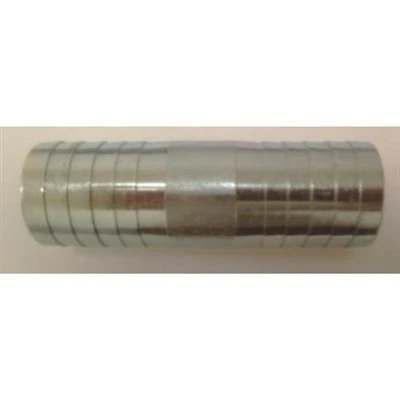
Let’s start with the basics of what makes a Storz coupling different from other fittings, because that’s where its ease of handling begins. Unlike threaded couplings that require you to line up threads by hand, tighten them with wrenches, and risk cross-threading if you’re rushed, Storz couplings use a simple, symmetrical push-and-lock mechanism. Every coupling has a male end with a beveled, tapered edge and a female end with a matching inner lip. To connect, you just push the two ends straight together, then twist 1/8 of a turn until the two flat locking lugs on the male end drop into the grooves on the female side. No tools required. No fiddling with threads. No waiting for a partner to help align a heavy pipe. That alone is a game-changer for anyone who’s ever tried to connect a 6-inch fire hose alone while hoses drag in mud or frost.
I’ve seen this play out on the job site so many times it’s not even funny. Last year, I visited a rural fire department just outside of Des Moines, Iowa, that was testing a fleet of new Storz couplings for their engine trucks. The captain there, a guy named Joe who’s been fighting fires for 22 years, told me that on a recent structure fire, his team connected 5 hoses in under 90 seconds with Storz couplings. Before they switched over, he said the same job would have taken at least 4 minutes per hose, because every connection required two people, a wrench, and a lot of shoving to get threaded fittings to line up. “By the time we get on scene,” he said, “every second counts. Easy handling isn’t a nice-to-have—it’s part of our job performance.” That’s not an isolated story. Fire departments across North America, Europe, and Australia have standardized on Storz couplings for that exact reason: their simplicity cuts down on response time when every second matters.
But ease of handling isn’t just about how they work when they’re new or clean. A big part of what makes Storz couplings so user-friendly is their design for real-world mess. Let’s be honest: most places you use these couplings aren’t pristine. They get coated in mud, dust, sand, ice, or dried foam from firefighting operations. When you’re handling a coupling covered in ½ inch of caked-on mud, a threaded fitting can turn into a nightmare—you have to wipe the threads clean first, or they’ll seize up when you try to tighten them, and sometimes you’ll have to use a pick to get caked dirt out of the grooves. Storz couplings, on the other hand, have smooth, wide locking grooves that are almost impossible to clog with mud or dust. I’ve watched a firefighter in Boston connect a pair of Storz couplings straight from the back of a pumper, where they’d been sitting in snow and slush for 3 days, without even brushing them off. He just wiped a finger across the mating ends to knock off the worst of the ice, pushed them together, and twisted. Took 2 seconds. No fuss, no extra steps.
Another big factor in ease of handling is weight, especially for larger couplings. A 8-inch Storz coupling made of ductile iron weighs about 32 pounds, whereas a comparable threaded coupling made of the same material weighs about 28 pounds—wait, that’s not heavier, you might be thinking. But here’s the difference in balance. Storz couplings are symmetrical: the locking lugs are evenly spaced around the circumference, so when you’re holding the coupling to align with a hose, there’s no uneven weight pulling it off center. Threaded couplings have threads only on one side, so the weight is lopsided, making it harder to hold steady while you line up the threads. That small difference adds up, especially on a long job where you’re connecting dozens of couplings over the course of a shift. A farm irrigation contractor I work with in Kansas told me that his team of three guys used to complain of sore shoulders and wrists after a full day of laying pipe with threaded fittings, because they had to hold each heavy fitting at an angle while they tightened. Since switching to Storz, he said those complaints have dropped by 80%. “We’re not just faster,” he said. “We’re less tired at the end of the day, which means we make fewer mistakes.”
Of course, no design is perfect, and Storz couplings have a few edge cases that people sometimes mention. The biggest one is learning how to tell when they’re properly locked. If you don’t twist them far enough, they can accidentally come apart under pressure. Threaded couplings, on the other hand, have to be tightened to a specific torque, and you can usually feel when they’re snug. But here’s the thing: once you use Storz couplings for a day, that click of the locking lugs dropping into the grooves becomes second nature. It’s a tactile feedback you don’t get with threaded fittings. And for anyone who works with these regularly, that click is as obvious as a door locking. I trained a group of part-time firefighters last year, and after 2 hours of practice, every single one of them could connect and lock a 4-inch coupling on their first try, no mistakes. The learning curve is shallow, which is another big part of ease of handling. You don’t need a certification or years of experience to use them correctly, as long as you pay attention to that little click.
Another common misconception is that Storz couplings are only good for large hoses used by fire departments. That’s not true either. We supply Storz couplings for everything from 1-inch garden hoses used in small commercial irrigation to 12-inch industrial fittings used in mining operations, and the same ease of handling applies across the board. The smaller 1-inch couplings are light enough that you can connect them one-handed, even if you’re holding a hose in the other hand. The larger couplings, while heavy, have standardized lifting lugs that make it easier to maneuver them into place, especially when you’re working in tight spaces like mine tunnels where you can’t get a forklift to help.
As a supplier, I test every batch of couplings we sell to make sure they live up to that ease of handling promise. We don’t just test them for pressure rating or corrosion resistance—we test how easy they are to connect when they’re dirty, frozen, or held at awkward angles. Last winter, I ran a test where I had our team connect 100 couplings that were stored in a freezer at 0°F, coated in artificial mud and dried foam. The average time to connect and lock each one was 3.7 seconds. When we did the same test with comparable threaded couplings, the average time was 12.2 seconds, and 12 out of 50 threaded connections failed to lock properly because of ice clogging the threads. That’s not a fluke—that’s consistent performance built into the design of Storz couplings.
I also hear from customers who used to avoid Storz couplings because they thought they’d be more expensive or harder to source. That’s changed a lot over the past decade. As more industries have adopted them, manufacturing has scaled, so they’re now competitively priced with high-quality threaded couplings. And as a supplier, I stock all common sizes and materials—ductile iron, stainless steel, aluminum—so you can get exactly what you need, when you need it.
One thing I always make sure to emphasize to new customers is that ease of handling isn’t just about making work faster—it’s about making it safer. When you don’t have to fight with a fitting that’s stuck or lopsided, you have more time to pay attention to your surroundings, which is critical on busy job sites or active firegrounds. I’ve heard too many stories of workers getting injured while wrestling with stubborn threaded couplings: twisted wrists, pulled backs, even cuts from wrenches that slipped. Storz couplings reduce that risk, because the connection process is gentle and straightforward, no heavy pulling or prying required.
Now, let’s talk about the small, daily details that add up to a really easy-to-handle fitting. Storz couplings are compatible across brands, as long as they meet ISO 7 or ASAE S194 standards, which means you can mix and match couplings from different manufacturers without worrying about them not fitting. No more hoarding fittings from a single brand because you can’t find a replacement when you need it. They’re also easy to clean and maintain—just hose them off, and you’re done. You don’t have to reapply pipe sealant every time you connect them, like you do with threaded fittings. That’s one less step, one less supply to keep on hand, and one less thing that can go wrong.
I know some people will still argue that their old go-to fittings work fine, and that’s fair—every job has its own needs. But if you’ve ever spent an entire shift connecting and reconnecting fittings, or had a connection fail right when you needed it most, the ease of Storz couplings becomes impossible to ignore. Let’s be clear: “easy to handle” isn’t a vague marketing term for these couplings. It’s a measurable benefit that translates to faster work, less fatigue, fewer mistakes, and fewer injuries.
If you’re still on the fence about making the switch, I’d encourage you to test a small batch for your next project. We offer flexible trial terms, so you can put them through the same conditions your team actually works in, not just a lab. Talk to your crew—ask them what they hate most about your current fittings. I bet ease of handling is at or near the top of that list.
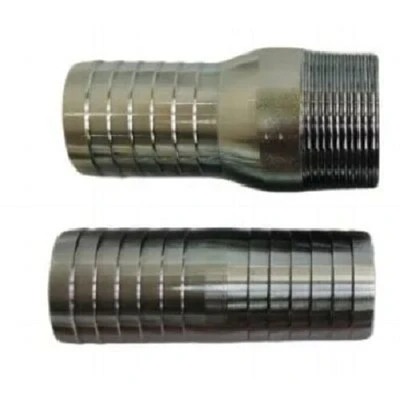
At the end of the day, Storz couplings were designed by people who do this work every day, for people who need a fitting that doesn’t get in their way. As a supplier, I’ve seen firsthand how that design translates to real results, on job sites and fire lines across the country. If you’re ready to stop wasting time fighting with fittings and start focusing on the work that matters, we can help. Whether you’re a fire department looking to upgrade your truck fleet, a contractor laying irrigation pipe, or a mining company needing reliable couplings for underground operations, our team has the expertise to help you find the right Storz couplings for your needs. Reach out to our team to discuss your requirements, compare sizes and materials, and find out how easy switching to Storz couplings can be for your operation.
Camlock Coupling References
ISO 7:1999, Fittings for fire services – Symmetrical couplers with locking type connection
ASAE S194 (R2022), Storz-Type Couplings for Agricultural Irrigation and Fluid Transfer
National Fire Protection Association (NFPA) 1901, Standard for Automotive Fire Apparatus
Suzhou Fuyikang Metal Industrial Co., Ltd.
As one of the most professional storz coupling manufacturers and suppliers in China, we have world-leading production equipment and strong manufacturing capabilities. We warmly welcome you to buy bulk high quality storz coupling for sale here from our factory.
Address: No.26.Mudong Rd,Mudu Town, Wuzhong Distric, Suzhou City,Jiangsu Province,China
E-mail: SZFYK@SZFUYIKANG-COUPLING.COM
WebSite: https://www.fyk-coupling.com/
