As someone who’s spent the last 12 years selling fence semi trailers—out on job sites, talking to fleet managers, and even sitting in on claims calls with insurance brokers— I can tell you this: when someone asks, “What’s the cost of insuring a fence semi trailer?” they’re almost never asking for a single number. It’s a question loaded with variables that don’t apply to box trucks, flatbeds, or even dry vans, because fence trailers aren’t just boxes on wheels. They’re built to haul everything from lumber and steel to grain and construction debris, which means their insurance risks are way different than what you’d find with a standard cargo trailer. Fence Semi Trailer
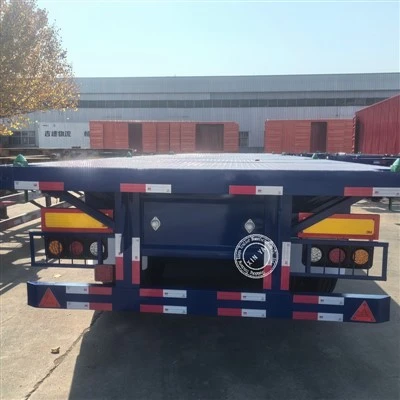
Let’s start with what a fence semi trailer actually is, for anyone new to the space. Unlike a closed box trailer, a fence semi has vertical metal rails (the “fence” part) along its sides, usually with a removable tarp or netting to cover loads. That open-sided design makes it easier to load bulky, irregularly shaped things like pipes or hay bales, but it also creates unique insurance headaches. Insurance companies don’t look at these trailers as just another piece of equipment—they look at how they’re used, what they haul, where they drive, and even who’s driving them. I’ve seen two identical trailers on the same lot, same year, same mileage, with insurance premiums 30% apart just because one’s owner hauls high-value electronics and the other hauls mulch. It’s not just about the trailer itself; it’s about the risk it carries.
First, let’s break down the biggest factor that drives insurance cost: the type of cargo you regularly haul. This is non-negotiable for insurance providers, because some loads are way more expensive to replace or repair if damaged. Let’s say you’re using your fence trailer to haul grain or agricultural supplies. That’s a low-risk cargo—if there’s an accident, you might lose a load, but the payout for the load is usually under $10,000. Insurance for these trailers will be cheaper, often landing between $1,800 and $2,800 a year for full coverage. But if you move to lumber, steel, or building materials, the load value jumps. A single load of steel I-beams can cost $50,000 or more, and if that load shifts in an accident (something that’s way more likely with an open-sided fence trailer than a closed one), you’re looking at hefty cargo claims. I had a customer last year who hit a pothole in Ohio, shifting a load of untreated lumber that damaged his trailer side and totaled half the load. His annual premium went up $1,200 after that, just because cargo value. Then there’s the highest risk: hazardous materials or high-value goods, like machinery parts or electronics. If you’re hauling anything classified as hazardous, insurance costs can jump to $4,500 to $7,000 a year, and many providers won’t even cover that without extra inspections.
Next, the trailer’s specifications and condition. As a supplier, I work with customers who want new trailers vs. used ones, and that’s a huge difference in insurance cost. A brand-new 53-foot standard fence semi—like the ones we build at our shop, with heavy-gauge steel and a commercial-grade tarp system—will have a higher value, so collision coverage (which pays to fix or replace the trailer after an accident) is more expensive. New trailers usually have full coverage premiums around $2,500 to $3,800 a year. A used trailer, say 8 to 10 years old with minor rust on the rails, might be 20% to 30% cheaper, around $1,800 to $2,900 a year. But here’s a thing most people don’t know: insurance companies check the trailer’s security features too. If your fence has custom locking mechanisms instead of standard latches, or you have a GPS tracker installed, that can lower your premium by 5% to 10%. I always tell new customers to invest in those small upgrades—they pay for themselves in insurance savings.
Then there’s the usage and operation details. How many miles do you drive a year? Where do you drive? And who’s driving the trailer? If you’re a small business owner driving 50,000 miles a year mostly on rural backroads, your risk of accident is lower than someone driving 150,000 miles a year on interstates through big cities. I have a customer in Iowa who only hauls grain within a 200-mile radius, pays $1,900 a year. Another customer in Texas who hauls steel across the country, 120k miles a year, pays $5,200 a year. The driver’s record matters too. If your driver has a clean CDL with no at-fault accidents or DUIs in the last 5 years, you’ll get a better rate. One of our repeat customers hired a new driver last year who had a speeding ticket for 20 over in a semi, and their premium went up $800 immediately. It’s not fair, but insurance companies base rates on data, and speeding in a semi is a strong predictor of accidents.
Liability coverage is another big piece of the puzzle, separate from cargo or collision. Most states require a minimum liability limit—usually $750,000 for commercial trailers—but many companies opt for higher limits, like $1 million or $2 million, just to cover big accidents. If you hit another car or damage property, liability pays for that. The minimum limit adds about $800 to $1,200 a year to your premium, while a $2 million limit can add $1,500 to $2,500. I always advise customers to check their state requirements, but also think about what they can afford if something goes wrong. It’s better to pay a bit more for liability than to lose your business over a big claim you can’t cover.
Wait, and what about specialty coverages specific to fence semi trailers? That’s what a lot of people miss. Because fence trailers have open sides, they’re more prone to load shifting than other trailers. There’s coverage called “cargo damage from shifting load” that some providers don’t automatically include—you have to add it on. That’s usually $300 to $600 a year extra, but it’s worth every penny. I’ve had two customers this year who skipped that add-on, and when their loads shifted, they had to pay $15k and $22k out of pocket for load damage. Another specialty coverage is “tarp damage coverage.” The tarps on fence trailers get beat up by wind, debris, and sun. If your tarp tears mid-load and you lose cargo to rain, that’s covered under some policies, but not all. That’s another $200 to $400 a year, again, worth it if you’re hauling grain or other weather-sensitive goods.
Now, let’s talk about common myths I hear all the time. First: “All insurance for fence trailers is the same.” No way. I had a customer a year ago who quoted a big national insurance company for $1,800 a year for a 10-year-old fence trailer hauling grain. Then he quoted a smaller, regional broker who specialized in commercial trailers, and got the same coverage for $1,200 a year. The national company had extra fees and fine print that the regional didn’t. Second: “A new trailer will always cost more to insure.” Not if you take advantage of discounts. We work with providers that offer 10% discounts for new trailers, and another 5% if you have a safety course for your drivers. A new trailer can end up costing the same as a 5-year-old one if you play your cards right. Third: “If you only use the trailer part-time, you pay less.” That’s true, but only if you can prove part-time use. A lot of customers say they use it part-time but end up driving full-time, and insurance will deny a claim if they lied. Honesty is always better here.
So what’s the average cost, if you’re a typical operator? Let’s say you have a 5-year-old fence semi, hauling lumber or building materials, driving 80,000 miles a year around your home state, with a clean driving record, minimum liability, and basic collision and cargo coverage. You’re looking at around $3,000 to $4,000 a year. If you have a new trailer, add $500 to $800. If you haul higher-value cargo or drive cross-country, add another $1,000 to $2,000. If you skip specialty coverages, maybe $500 less, but I don’t recommend that.
As a fence semi trailer supplier, I don’t just sell you a trailer— I help you work through all this insurance stuff, because I know it’s a huge part of your total cost. I’ve sat in on enough quote calls to know that a small difference in cargo type or usage can add up to thousands a year. If you’re in the market for a new or used fence trailer, or you’re looking to lower your current insurance costs, reach out. We can walk through your specific needs, recommend trusted brokers who specialize in trailer insurance, and help you pick a trailer that fits both your hauling needs and your budget. Don’t guess at your insurance costs—talk to someone who knows both the trailers and the industry.
Container Trailer References:
- American Trucking Associations. (2023). Commercial Trailer Insurance Cost Trends & Risk Factors.
- National Association of Insurance Commissioners. (2022). Commercial Vehicle Insurance Guide for Owner-Operators and Small Fleets.
- Transportation Insurance Services. (2023). Specialty Trailer Coverage: Fence Semi Trailers Unique Risks and Solutions.
- Federal Motor Carrier Safety Administration. (2022). Commercial Driver Record Impact on Insurance Premiums.
Shandong Yuncheng Xinya Trailer Manufacturing Co., Ltd.
Shandong Yuncheng Xinya Trailer Manufacturing Co., Ltd. is one of the most experienced fence semi trailer manufacturers and suppliers in China, featured by quality products and good service. Please rest assured to buy CE approved fence semi trailer from our factory. Contact us for customized service and OEM service.
Address: No. 008, Hexie Road, Yangzhuangji Town, Yuncheng County, Heze City, Shandong Province
E-mail: fiona@xinyatrailer.com
WebSite: https://www.china-truckfactory.com/
