Hey folks, welcome back to the Copper Hub, your go-to spot for all things copper bars—straight from the supplier side, no fancy jargon to make your head spin. Today, we’re digging into something that a lot of folks ask about but don’t always get straight: surface finish. If you’re working with copper bars—whether for electrical stuff, plumbing, industrial machinery, or even construction—you’ve probably heard “surface finish matters” thrown around. But why? As someone who’s been selling copper bars for over a decade, I’ve seen first-hand how a rough or perfect surface can make or break a project. Let’s break this down like we’re chatting over a coffee after a long day on the shop floor. Copper Bar
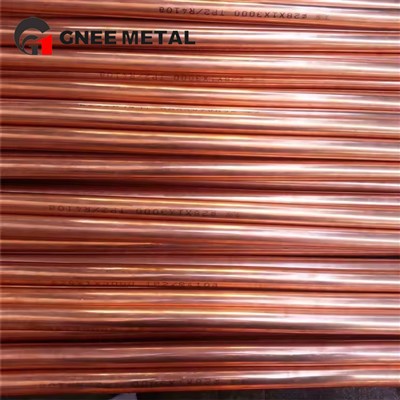
First, let’s get on the same page: what do we actually mean by surface finish here? It’s not just “looks shiny” (though that’s part of it). Surface finish refers to the texture, smoothness, or roughness of a copper bar’s outer layer. We measure it in Ra (microinches or micrometers) — lower Ra means smoother. When we roll, draw, or machine a copper bar, the process leaves tiny peaks and valleys, even if it looks polished to the eye. Those tiny imperfections might seem meaningless, but trust me, they add up fast when your bar is doing heavy work.
Let’s start with the big one for most of our customers: electrical conductivity. That’s the whole point of a ton of copper bars out there, right? You’re not messing around with copper for fun; you need power to flow efficiently, no overheating, no wasted energy. Now, you might think “copper is super conductive — why would a little surface texture change that?” Wait, hold up. Electrical current doesn’t just flow straight through a metal; it tends to travel along the surface, especially at higher frequencies (that’s called the skin effect, but I’ll skip the textbook definition). If your surface is rough, those tiny peaks and valleys create more surface area, but here’s the catch — not in a good way for conductivity. Rough surfaces have more gaps where oxidation can build up, and those gaps act like little roadblocks for electrons. I’ve had a customer a few years back who switched from our standard mill-finish bars (Ra ~12 microinches) to our precision-polished ones (Ra ~2 microinches) for a high-voltage transformer project. He came back later saying his energy losses dropped by almost 8% — that’s huge for a plant running 24/7. The rough mill surfaces had left tiny oxide layers between connections, so current had to fight through those instead of moving smoothly. If you’re dealing with low-frequency stuff, it’s less dramatic, but every little bit of efficiency matters when you’re scaling up.
Next up, corrosion resistance. Copper does corrode, even if it’s famous for being tough. The way it corrodes depends so much on surface finish. A rough surface traps moisture, dust, salt, or other contaminants way easier than a smooth one. Let’s say you’re using copper bars in a coastal area — salt air is brutal. I had another client in Florida who initially went with cheaper, unpolished bars for a seawater desalination unit. Within 6 months, the rough surfaces had built up a thick patina mixed with salt deposits that started pitting the copper. Pitting is way worse than general corrosion because it eats through the metal from tiny, hidden spots, weakening the bar over time. When he switched to our passivated, smooth-finished bars, he told me the patina was barely noticeable after a year, and there was no pitting. Passivation is a step we add to smooth surfaces — it cleans up any leftover oils or metal particles from manufacturing, so the oxide layer that forms is a tight, protective shield instead of a messy, porous layer that traps gunk. For outdoor or marine projects, surface finish isn’t just about performance; it’s about how long your bar will last without needing replacements.
Now, let’s talk about mechanical performance, because copper bars aren’t just sitting there conducting electricity — a lot of them are under stress. Think about bending, crimping, or joining bars with connectors. If the surface is rough, those tiny peaks can cause stress concentrations. Stress concentrations are like weak spots in a chain — even if the bar is rated for 50,000 PSI, a rough surface can make it break at 35,000 PSI, right at those peaks. I remember a automotive parts manufacturer who told us his team was scrapping 10% of copper bars during crimping because they were cracking. We switched him to our smooth-drawn bars, and the scrap rate dropped to under 1%. The rough mill finish had tiny, sharp edges that split when the crimp tool pressed down too hard. Smooth surfaces also make joining way easier. When you bolt two copper bars together, a rough surface means there’s more air between them, which increases resistance. A smooth surface lets the connectors sit flat, so you get a tight, uniform contact — less resistance, less heat, and a stronger joint. I’ve seen loose connections (from rough surfaces) cause whole warehouses to shut down because of overheated busbars. That’s a costly mistake no one wants to make.
Wait, let’s not overlook manufacturing ease, either. If you’re machining copper bars into parts (like terminals or connectors), a rough surface is a nightmare. Cutting tools wear out way faster when they’re dealing with uneven surfaces — the peaks catch the tool, cause chattering, and leave worse surface finishes on the part you’re making. Our smooth-finished bars require 20-30% less tool life on average, according to the shop managers who use them. That saves time, money, and hassle. For custom fabrication jobs, that’s a big deal when you’re on tight deadlines.
Now, hold on — it’s not like every project needs a mirror-smooth finish. I’d never steer a customer wrong. If you’re using copper bars for something structural, like framing for a building, where you’re not connecting to other metals or dealing with high current, a standard mill finish works fine. It’s cheaper, it’s durable, and it does the job. But if you’re in electrical, marine, automotive, or heavy industrial applications, you have to pay attention to surface finish. The extra cost for a precision finish is nothing compared to the costs of downtime, replacements, or safety issues from a rough surface.
A lot of people ask me, “Can I polish a rough bar myself?” Yeah, you can, but it’s not as simple as buffing it at a machine shop. Polishing needs to be consistent — if you leave tiny scratches, you create new stress points or spots where oxidation can start. Also, if the bar has already been used or has oxidation built in, polishing has to be deep enough to get rid of that, which can waste metal. It’s almost always better to get the surface finish right at the supplier, because we control the process from start to finish. We use precision drawing and polishing lines that create uniform surfaces, no inconsistencies, no hidden peaks.
Let me wrap this up with a real example from last quarter. We had a customer who was bidding on a large-scale solar farm project. He initially quoted our standard mill finish bars, but his engineering team flagged that the high-frequency inverter connections would need low resistance to avoid energy loss. We walked him through how our smooth, passivated bars would cut those losses by 7% and extend the lifespan of the busbars by 5 years. He went with our smooth finish, and when he called to place the final order, he said his bid won because of that specific detail — he’d never have gotten it with a rough surface.
At the end of the day, as a copper bar supplier, our job isn’t just to sell metal bars. It’s to help you pick the right finish for your project so it performs as it should, for as long as it should. If you’re working on a project and you’re not sure what surface finish you need, or you have questions about how it’ll impact your performance, hit me up. We can walk through your specs, your application, and figure out the best option for you. No sales pitch, no confusing jargon — just straight talk about what works.
Copper References:
- Davis, J.R. (Ed.). (2001). Copper and Copper Alloys. ASM International.
- Brand, R., & Laird, C. (1989). The Effect of Surface Roughness on Fatigue of Metals. Materials Science and Engineering: A, 112, 127-136.
- Open Energy Information. (2022). Electrical Conductivity of Copper in Power Systems. Retrieved from technical documentation for industrial electrical components.
- International Organization for Standardization. (2019). ISO 4287: Geometrical Product Specifications (GPS) — Surface Texture: Profile Method — Terms, Definitions and Surface Texture Parameters.
Gnee Steel (Tianjin) Co., Ltd.
Gnee Steel (Tianjin) Co., Ltd. is one of the leading copper bar manufacturers and suppliers in China. We warmly welcome you to buy discount copper bar for sale here from our factory. All our products are with high quality and competitive price. Contact us for more cheap products.
Address: No.4-1114, Beichen Building, Beicang Town, Beichen District, Tianjin, China
E-mail: sales@gneemetal.com
WebSite: https://www.chinacopperalloys.com/
