If you’ve ever walked through a manufacturing plant that processes natural gas, fills industrial-grade oxygen tanks, or runs chemical synthesis lines, you’ve almost certainly encountered a high pressure piston compressor. These workhorses have underpinned heavy industry for more than a century, yet for years, they were seen as a mature technology—slow to evolve, built for durability over innovation. That’s no longer the case. As a high pressure piston compressor supplier, I’ve spent the last decade watching engineers reimagine every part of these machines, solving long-standing pain points: energy waste, premature part failure, and the need for more precise pressure control in harsh operating conditions. Today’s new technologies aren’t just incremental upgrades; they’re redefining what these compressors can do, for industries ranging from hydrogen energy to food and beverage processing. High Pressure Piston Compressors

Let’s start with the single biggest cost for any compressor user: energy efficiency. For high pressure piston compressors, energy can account for 70 to 80 percent of total operational costs, so even a 5 percent efficiency gain translates to tens of thousands of dollars in annual savings for large-scale users. The newest innovation here is variable speed drive (VSD) integration paired with modular piston design. Early VSD systems for piston compressors often struggled with the high torque demands of compressing gas to pressures up to 5,000 psi or more, leading to frequent motor overloads and component wear. The latest iterations, however, pair high-torque, low-speed permanent magnet motors with adaptive control algorithms that adjust piston stroke and rotational speed in real time to match fluctuating demand. For example, a plant that needs 3,000 psi for four hours a day and drops to 1,500 psi for the rest can adjust the compressor’s output without wasting energy idling. We recently retrofitted a 10-year-old system for a natural gas processing plant with this setup, and they reported a 18 percent drop in monthly energy bills within six months. That’s not just a minor win; it’s a game-changer for operators looking to hit net-zero emissions targets.
Next is leak prevention, a nagging issue that’s plagued piston compressor operators for decades. Traditional piston rings, usually made of cast iron or carbon, wear unevenly over time, leading to small gas leaks that add up to millions of cubic feet of lost gas annually—especially in high-pressure applications. The new solution here is advanced composite piston rings, made from a proprietary blend of PTFE, glass fiber, and nano-ceramic particles. These rings are 30 percent harder than standard carbon rings, resist wear at high temperatures (up to 250°C), and conform more tightly to the cylinder wall, reducing leakage by up to 40 percent compared to legacy designs. We’ve also started seeing coated cylinder liners—ceramic-based plasma-sprayed coatings that cut friction between the piston and cylinder by half. One of our aerospace clients, who uses high pressure compressors to fill test fuel tanks, told us their leak rate dropped from 2.1 percent to 0.4 percent after switching to these parts, cutting their material waste by more than $120,000 a year.
Another area where innovation is thriving is predictive maintenance, a shift from the old “run until it breaks” model to data-driven, proactive care. For years, operators would only notice a problem when the compressor shut down unexpectedly, costing them thousands in downtime. Today’s high pressure piston compressors are equipped with embedded IoT sensors that monitor 12+ parameters in real time: piston temperature, cylinder pressure, vibration levels, lubricant quality, and even the sound of the compressor’s operation. The sensors feed data to a cloud-based platform that uses machine learning algorithms to identify patterns that signal impending failure—like a slight increase in vibration that hints at a worn connecting rod, or a drop in pressure that points to a failing valve. This isn’t just theoretical; we’ve seen clients cut unplanned downtime by 75 percent since implementing these systems. For a pharmaceutical plant that relies on high pressure nitrogen for packaging, that meant avoiding two shutdowns a year that would have cost them upwards of $50,000 each in lost production.
Wait, let’s be clear: not all IoT sensors are equal for high pressure applications. The harsh environments these compressors operate in—extreme temperatures, corrosive gases, high vibration—can damage standard off-the-shelf sensors. That’s why we work with manufacturers to build sensors rated for IP67 and ATEX Zone 1 certification, meaning they’re explosion-proof and can operate in gas-rich environments without risk. We also integrate edge computing capabilities into the compressor’s control unit, so critical alerts are generated on-site, not in the cloud, which reduces lag time for urgent maintenance.
Valve technology is another space where dramatic changes are happening. Traditional compressor valves are spring-loaded, which can suffer from fatigue and failure after millions of cycles. For high pressure applications, where valves open and close up to 100 times per minute, that fatigue leads to frequent replacements. The new design here is poppet valves with shape-memory alloy components. Shape-memory alloys (SMAs) are metals that return to a pre-set shape when heated, making them ideal for valves that need to open and close quickly without spring fatigue. Unlike metal springs, SMAs can withstand billions of cycles without losing elasticity, and they adjust their tension automatically based on pressure changes, reducing stress on the valve. Early tests show these valves have a 10x longer lifespan than standard spring-loaded valves, cutting maintenance costs for valve replacements by 60 percent. A client in the hydrogen fuel sector, where compressors run 24/7 to compress hydrogen for fueling stations, told us their valve replacement schedule went from every three months to every two years after switching to SMA valves.
Hydrogen is a huge driver of innovation in high pressure piston compressors right now, and for good reason. As countries scale up hydrogen production for clean energy, compressors need to handle hydrogen’s unique properties: it’s highly flammable, has a small molecular size that makes it prone to leakage, and can cause embrittlement in traditional steel parts. The newest technologies tailored for hydrogen compressors start with alloy-specific piston and cylinder materials, like 17-4 PH stainless steel that resists hydrogen embrittlement, and diaphragm-sealed compression stages that prevent hydrogen leakage—something older piston designs often struggled with. We’ve also seen progress in oil-free compression stages for hydrogen, which is critical because even tiny traces of lubricant can contaminate hydrogen fuel, making it unfit for use in fuel cells. Our oil-free piston compressors use Teflon-coated piston rings and self-lubricating composite cylinders, eliminating the need for oil in the compression chamber, which simplifies post-compression purification steps and reduces operational risk.
Another often-overlooked area of innovation is noise reduction. High pressure piston compressors generate noise levels up to 110 decibels, equivalent to a jackhammer, which requires operators to wear heavy ear protection and can lead to hearing damage over time. The latest designs use acoustic packaging that’s not just thick foam, but tuned resonance chambers that cancel out specific frequencies generated by the compressor’s piston motion. We’ve also integrated variable intake silencers that adjust based on compressor load, reducing noise by up to 25 percent during low-demand runs. A food and beverage client, who uses high pressure air to package canned goods, reported that their plant’s noise levels dropped from 108 dB to 85 dB after installing our new compressor design, making the workspace safer for their 120 employees.
Now, I know some operators are skeptical of new technologies, especially when it comes to a piece of equipment as critical as a high pressure piston compressor. After all, the old adage “if it ain’t broke, don’t fix it” has a lot of truth when downtime can cost thousands. But what we’re seeing with these new technologies is that they don’t just make compressors more innovative—they make them more reliable, more affordable, and more adaptable to changing industry needs. For example, the modular piston design we mentioned earlier lets operators adjust compressor output for different applications without buying an entirely new machine. One of our users, a specialty chemical manufacturer, uses the same base compressor to compress nitrogen for batch production one month and argon for another, just by swapping out piston modules. That flexibility has cut their capital expenditure on compressors by 40 percent over the last three years.
Of course, innovation in this space doesn’t happen overnight. It takes years of testing in real-world conditions, partnerships with industry leaders, and a focus on solving actual user pain points—something we prioritize as a supplier. We don’t just sell compressors; we work with clients to customize these new technologies to their specific needs, whether that’s a small manufacturing plant needing a compact, energy-efficient unit or a large energy firm requiring a 10,000 psi compressor for carbon capture applications.
If you’re an operator who’s been dealing with high energy bills, frequent maintenance, or compliance issues with your current high pressure piston compressors, now is the time to explore these new technologies. The old days of one-size-fits-all compressors are long gone, and the right modern compressor can deliver significant savings, lower emissions, and fewer disruptions to your operations. I’ve seen it firsthand with dozens of clients over the last few years, and I can tell you that the investment in upgrading or replacing your existing equipment will pay for itself in just a few years, often less.
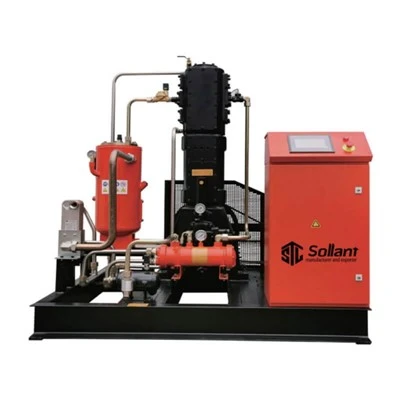
If you’d like to learn more about how these new technologies can work for your application, I’m here to help. Our team has decades of experience designing and installing high pressure piston compressors for a wide range of industries, and we can walk you through your current pain points, walk you through the latest innovations, and help you find a solution that fits your budget and operational needs. Don’t wait until a breakdown costs you thousands in downtime—reach out to us to connect and start a conversation about upgrading your compressor system today.
Centrifugal Air Compressor References
- International Energy Agency. (2022). The Future of Hydrogen: Supply, End-Use, and Costs.
- Compressed Air and Gas Institute. (2021). High Pressure Compressor Technology Trends Report.
- American Society of Mechanical Engineers. (2020). Oil-Free Compression Systems for Industrial Applications.
- Hydrogen Council. (2022). Compressor Innovation for Large-Scale Hydrogen Infrastructure.
- Journal of Manufacturing Processes. (2021). Advanced Piston Ring Materials for Reducing Leakage in Reciprocating Compressors.
Shanghai Sollant Energy Saving Technology Co., Ltd.
As one of the most professional high pressure piston compressors manufacturers and suppliers in China, we’re featured by quality products and good service. Please rest assured to buy bulk durable high pressure piston compressors from our factory. Welcome to view our website for more information.
Address: No.215, Songri Center, Beihongqiao, Jiading District, Shanghai, China.
E-mail: info3@sollant.com
WebSite: https://www.sollant-gas.com/
